

What this means for your practice
Review image permission, source and explanatory context before choosing the final presentation. A visual should not imply an outcome the organisation cannot support with evidence.
An example to discuss with your team
Show the proposed gallery without the draft's surrounding explanation and ask the reviewer what a reasonable visitor might infer from it.

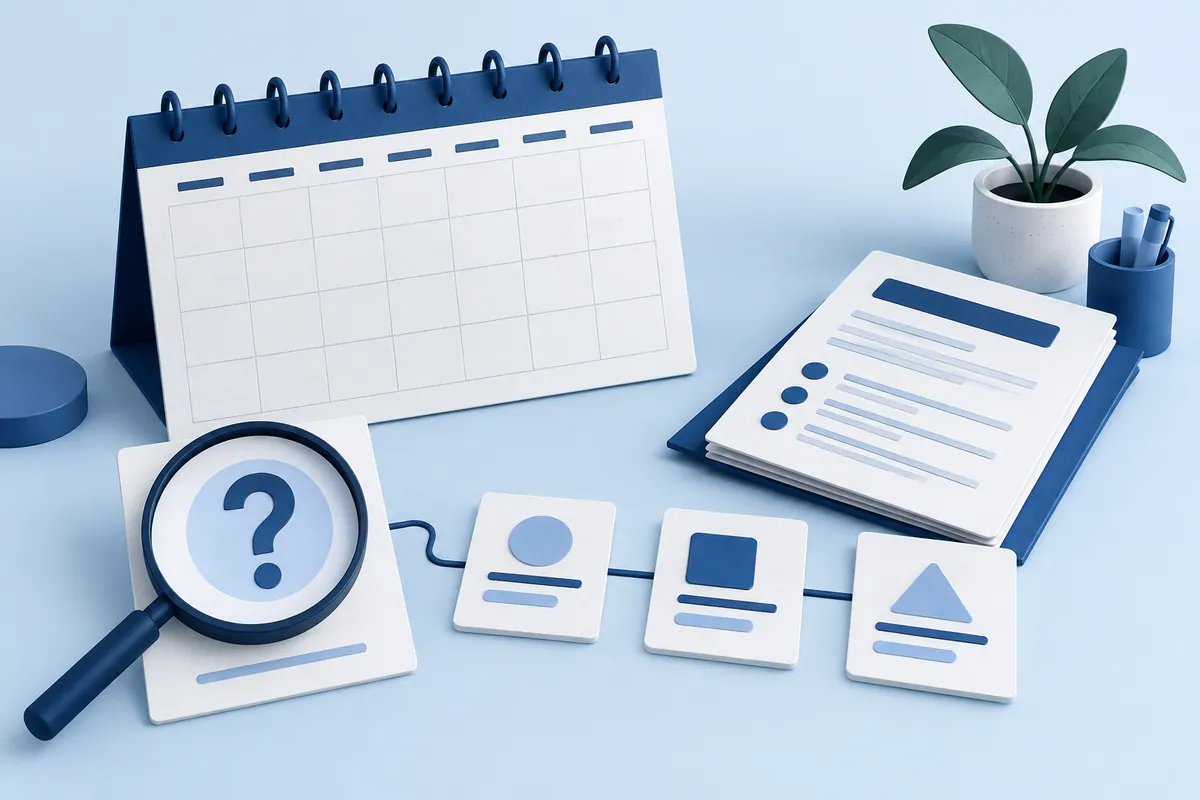
What to discuss with your agency
Ask the reviewer to see the gallery on its own. Does it suggest a comparison or expected outcome that the evidence does not support? Keep AI-generated visuals separate from genuine outcome evidence: use them for clearly illustrative scenes, never as invented before-and-after results or fabricated patient examples.
Put the brief into practice
Decide the purpose of each image before selecting it. A picture may illustrate an environment, explain a process or document a real result, and those uses need different evidence and context. Keep permission for the intended publication, source information and relevant captions connected to the asset. Ask the reviewer what the overall presentation implies, especially where images are placed side by side or presented as a sequence. Differences in framing, lighting or other context can affect how a visitor interprets a comparison.
An AI-created illustration can support explanation but should not be presented as a real patient result, a genuine team photograph or evidence of your facilities. Review the gallery independently of the internal notes the design team has seen. If the public caption cannot support an accurate interpretation, reconsider the image or layout. Keep approval tied to the final crop and arrangement so later design changes do not introduce an implication the reviewer never assessed.
How to check the result
Count assets rejected or corrected because their context or permission was incomplete.
Turn reading into a next step
Your action checklist
Work through these checks with your team or supplier. Tick the ones you have resolved and leave unknowns open.
Record what you know, what is still missing and the answer you need from your team or supplier.
Use project decisions only, without personal, patient or confidential details. Entries stay in this page and are not submitted to Kay & Co. Copy or download before leaving; this page does not save your notes.
Further reading
These sources provide background for the topic. The practice examples and checklist are illustrative planning suggestions from Kay & Co.
Related guides
Need help with this?
Tell us what is getting in the way. Kay & Co. can help you understand the options and turn the next step into something that works for your practice.
Explore marketing & search services or discuss your project.
Try the free Healthcare Digital Planner to find your starting priority.