

What this means for your practice
Choose a naming and presentation structure that reflects real ownership and service relationships. Make the organisation understandable before standardising every name or visual asset.
An example to discuss with your team
Ask an unfamiliar reader which organisation provides a fictional service.

A practical example
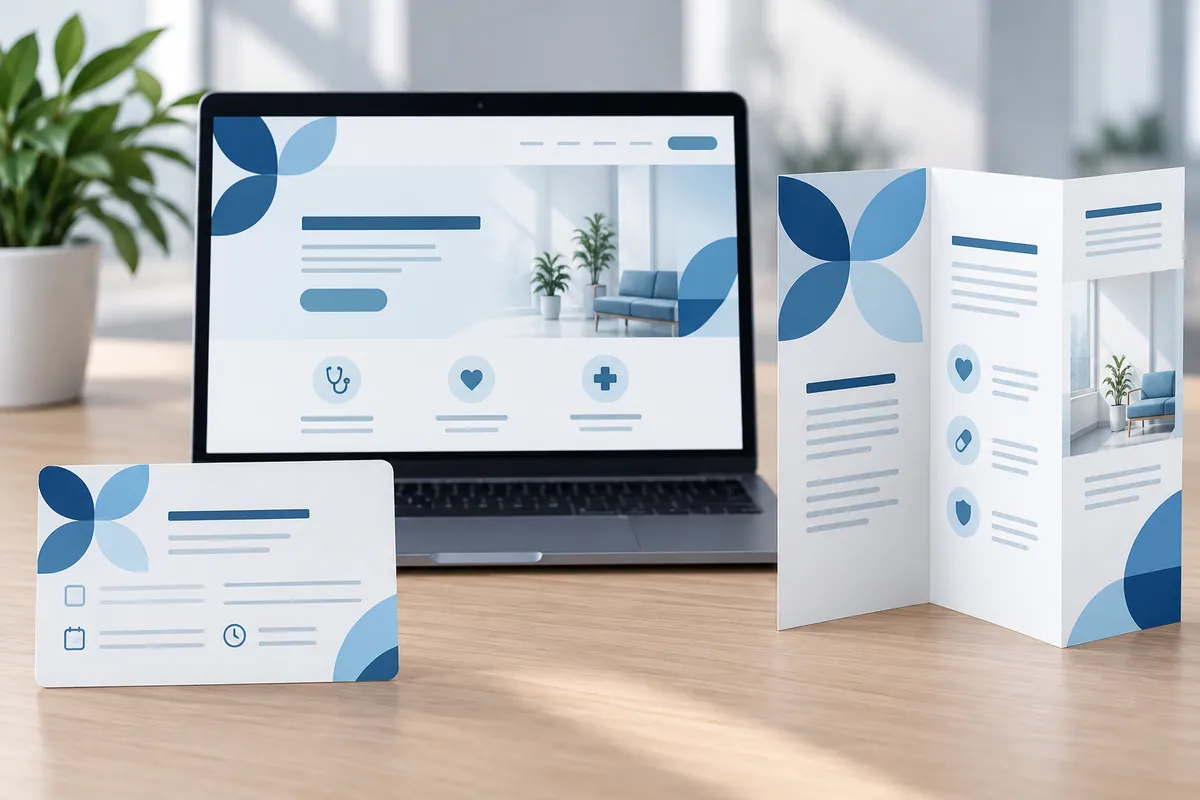
For example, a locally known clinic may sit within a wider group while retaining its familiar public name. Ask the business owners to confirm the relationship that can be stated, then ask the designer to show it on the website, appointment message and sign. Test whether an unfamiliar reader understands those examples. A good structure supports recognition and accurate expectations without making every visitor learn the organisation's internal chart before arranging an appointment.
Use the same relationship wording across short and long descriptions. A logo arrangement alone may not explain whether a service is part of the group or independently provided. Readers need a clear factual sentence where the relationship affects their choice or contact route.
Make the design useful in everyday work
Draw the relationship between the organisation and its services in plain language before choosing how names should look. Ask an unfamiliar reader which provider stands behind a sample service page and where they would contact the organisation. Confusion may come from names, visual treatment or missing explanation, so do not assume renaming everything is the first answer. Keep actual ownership and service relationships verified by the responsible business team. Agree how the structure will handle a new service later. A useful naming arrangement makes the organisation understandable today while giving staff a clear basis for future additions.
How to check the result
Track misunderstood relationships in enquiries.
Turn reading into a next step
Your action checklist
Work through these checks with your team or supplier. Tick the ones you have resolved and leave unknowns open.
Record what you know, what is still missing and the answer you need from your team or supplier.
Use project decisions only, without personal, patient or confidential details. Entries stay in this page and are not submitted to Kay & Co. Copy or download before leaving; this page does not save your notes.
Further reading
These sources provide background for the topic. The practice examples and checklist are illustrative planning suggestions from Kay & Co.
Related guides
Need help with this?
Tell us what is getting in the way. Kay & Co. can help you understand the options and turn the next step into something that works for your practice.
Explore brand & design services or discuss your project.
Try the free Healthcare Digital Planner to find your starting priority.