

What this means for your practice
Require a clear audience or practical reason for a distinct identity. Compare the benefit with the ongoing work of maintaining names, assets, websites and information consistently.
An example to discuss with your team
Present shared and separate-brand versions of the same service journey.

A practical example
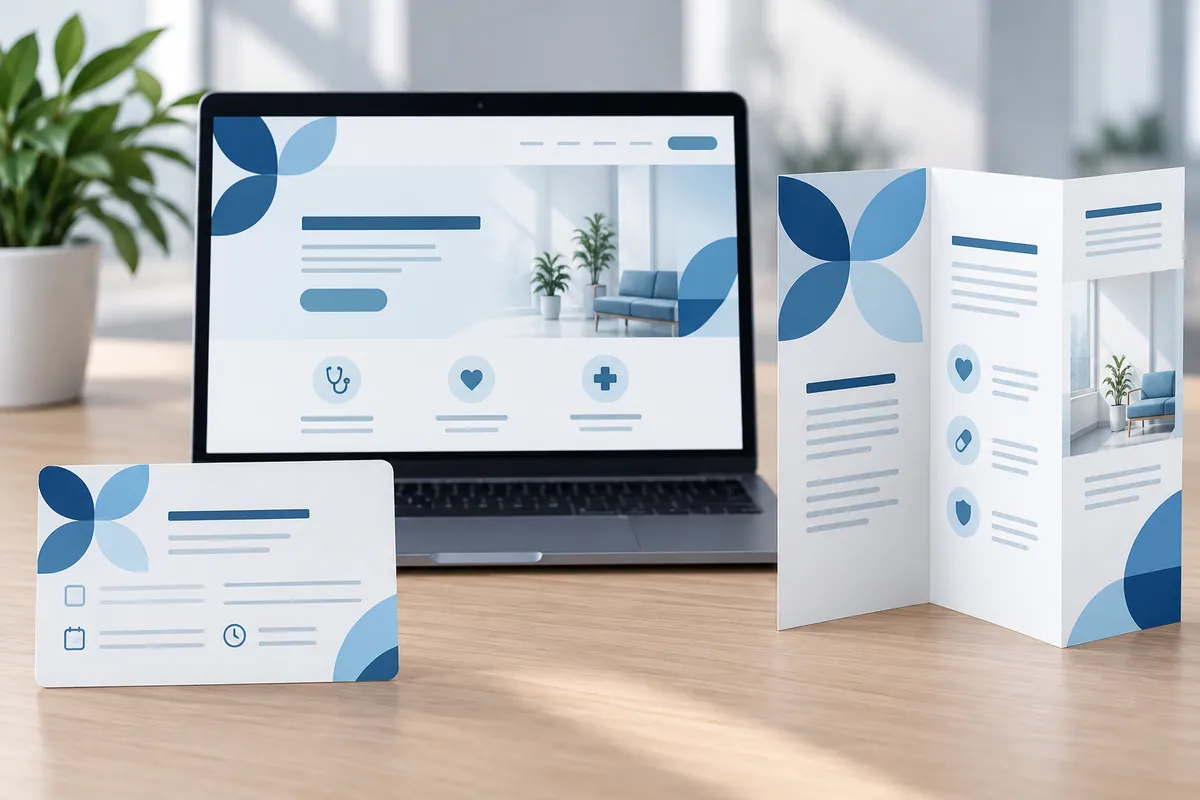
For example, a new appointment programme may be easier to understand as part of the practice patients already know. Ask the designer to show both approaches in a realistic enquiry journey. Ask staff what they would need to explain on the phone. Include the ongoing cost of updating information across each identity, not only the initial design fee. A good decision has a clear reason the team can revisit when the service grows or changes.
Ask who would maintain the additional identity after launch. A separate brand needs current messages, files and contact information, not only an initial design. Naming those responsibilities helps the practice judge whether the proposed distinction will remain useful when the first project team moves on.
Make the design useful in everyday work
Describe the audience benefit a separate identity is meant to provide. It may make a genuinely distinct offer easier to recognise, but it also creates work maintaining names, assets and information. Compare a realistic shared-brand journey with a separate-brand version and ask what readers understand about the provider and next step. Include the costs of ongoing updates in the discussion, not only the initial design fee. If the proposed distinction cannot be explained clearly to a new reader, reconsider whether another name helps. The decision should solve a practical communication problem rather than simply give an internal team its own logo.
How to check the result
Record whether separation improves understanding of the offer.
Turn reading into a next step
Your action checklist
Work through these checks with your team or supplier. Tick the ones you have resolved and leave unknowns open.
Record what you know, what is still missing and the answer you need from your team or supplier.
Use project decisions only, without personal, patient or confidential details. Entries stay in this page and are not submitted to Kay & Co. Copy or download before leaving; this page does not save your notes.
Further reading
These sources provide background for the topic. The practice examples and checklist are illustrative planning suggestions from Kay & Co.
Related guides
Need help with this?
Tell us what is getting in the way. Kay & Co. can help you understand the options and turn the next step into something that works for your practice.
Explore brand & design services or discuss your project.
Try the free Healthcare Digital Planner to find your starting priority.