

What this means for your practice
Agree which record confirms completion and how that stops further tasks. Make disagreements visible when a connected tool cannot establish whether the work is finished.
An example to discuss with your team
Complete a fictional task before the next automation cycle.

A practical conversation with your supplier
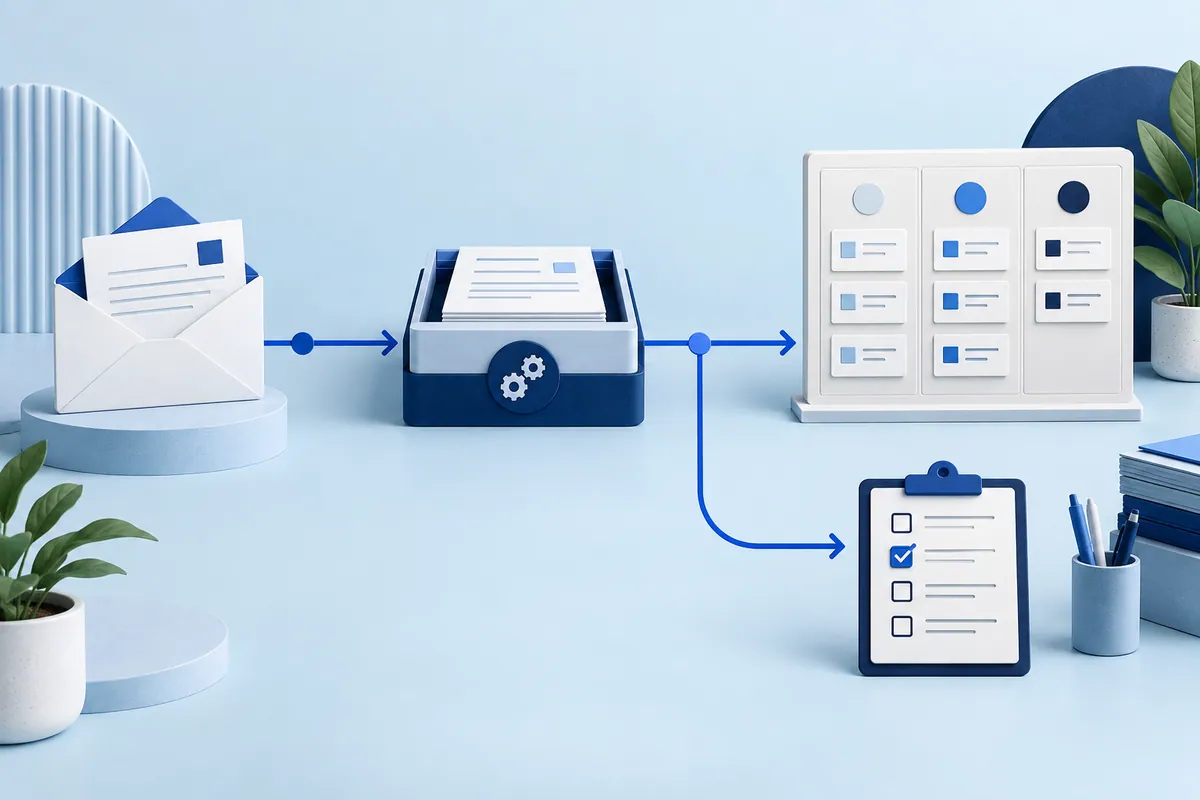
Complete a fictional task before the next scheduled run, then reopen it. Ask the supplier to explain both outcomes. Any disagreement between systems should reach an owner rather than generate endless work. Measure duplicate chasing alongside missed follow-up so one improvement does not conceal the other problem.
Plan the first improvement
Identify the record that staff use to confirm completion and ask how that change reaches the automation. Where systems disagree, decide which owner investigates rather than letting the task generator choose an arbitrary result. Reopening also needs an explicit rule. A newly reopened enquiry may require a fresh action, but it should not automatically inherit every reminder from its earlier life. Use a sequence of complete, reopen and complete again in testing so the supplier demonstrates the whole pattern.
Keep task history understandable for staff who need to explain why a reminder appeared. Consider work finished manually during an outage, because it may not have updated the normal completion source yet. Agree how those cases are reviewed before the next run. In regular checks, look at repeated tasks and missed follow-ups together. Eliminating duplicates by stopping too broadly could conceal legitimate work, so the business owner should assess the actual outcomes rather than one favourable count in isolation.
How to check the result
Count repeated tasks for already-completed work.
Turn reading into a next step
Your action checklist
Work through these checks with your team or supplier. Tick the ones you have resolved and leave unknowns open.
Record what you know, what is still missing and the answer you need from your team or supplier.
Use project decisions only, without personal, patient or confidential details. Entries stay in this page and are not submitted to Kay & Co. Copy or download before leaving; this page does not save your notes.
Further reading
These sources provide background for the topic. The practice examples and checklist are illustrative planning suggestions from Kay & Co.
Related guides
Need help with this?
Tell us what is getting in the way. Kay & Co. can help you understand the options and turn the next step into something that works for your practice.
Explore ai & automation services or discuss your project.
Try the free Healthcare Digital Planner to find your starting priority.