

What this means for your practice
Provide the purpose, audience and interface context for translated content. Give qualified reviewers a way to resolve clinical or specialist terminology rather than accepting a literal translation blindly.
An example to discuss with your team
Ask a reviewer to interpret a translated confirmation in its actual screen context.

A practical example
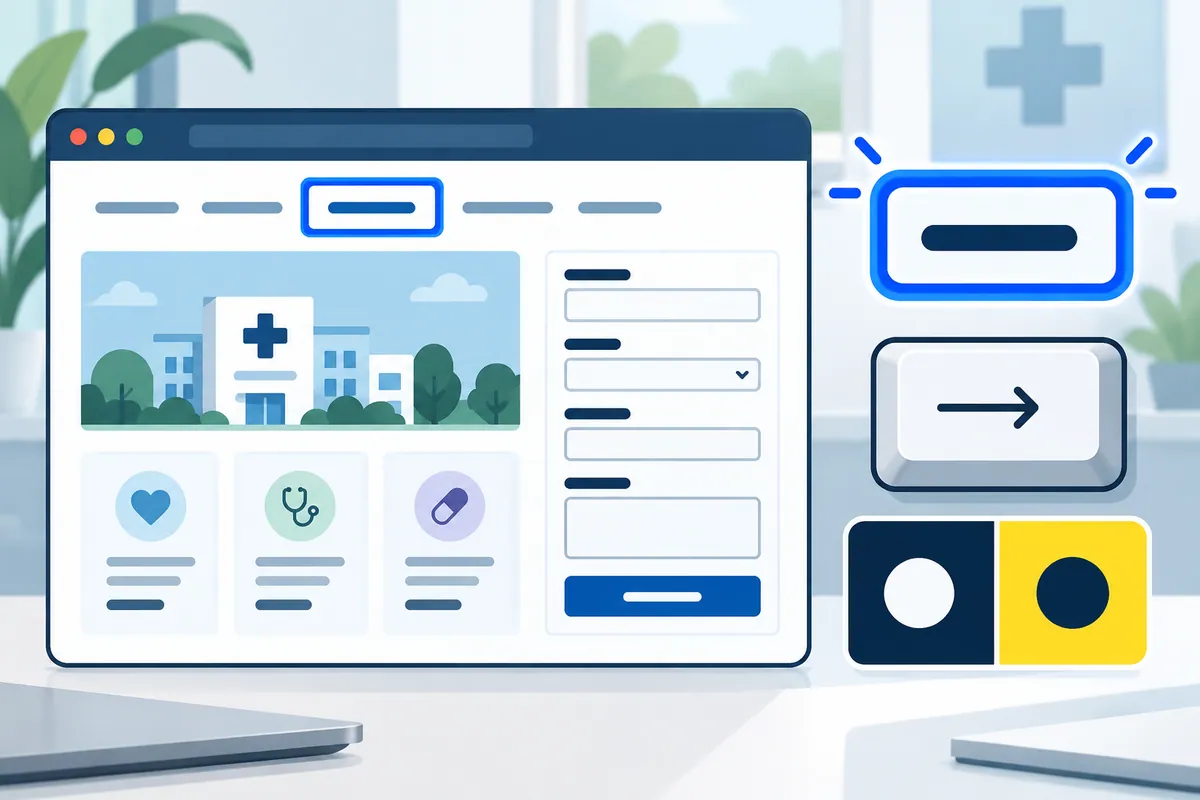
For example, “Request appointment” must not become wording that suggests the appointment is already confirmed. Show the translator what happens after the button and ask a reviewer to explain the translated journey in their own words. Your service team should settle questions about the offer; the translator should not have to guess them. The useful outcome is a complete experience that communicates the same practical steps in each language.
Tell translators which names should match signs, appointment messages or external booking labels. Context can help them explain a term naturally without changing a name patients need to recognise elsewhere. Keep agreed terminology available to anyone who later writes messages in the same language.
Make this improvement work
Give the translator or reviewer the purpose of the page, its audience and the surrounding screen context. A short button label or confirmation can be misunderstood when supplied as an isolated phrase. Identify specialist terms requiring a qualified decision and keep a route for resolving uncertainty with the responsible service team. Ask the supplier to show the reviewed wording in the actual layout, including longer text on a narrow screen. The meaning should survive the design without unexplained shortening. Record approved terminology for future updates, while allowing the reviewer to flag cases where a previous translation no longer fits the changed service.
How to check the result
Count corrections caused by missing translation context.
Turn reading into a next step
Your action checklist
Work through these checks with your team or supplier. Tick the ones you have resolved and leave unknowns open.
Record what you know, what is still missing and the answer you need from your team or supplier.
Use project decisions only, without personal, patient or confidential details. Entries stay in this page and are not submitted to Kay & Co. Copy or download before leaving; this page does not save your notes.
Further reading
These sources provide background for the topic. The practice examples and checklist are illustrative planning suggestions from Kay & Co.
Related guides
Need help with this?
Tell us what is getting in the way. Kay & Co. can help you understand the options and turn the next step into something that works for your practice.
Explore websites & patient experience services or discuss your project.
Try the free Healthcare Digital Planner to find your starting priority.