
What to change
Ask your supplier to keep purely decorative symbols quiet in reading software while retaining useful names for icons that communicate information or perform actions.
A worked example
Illustrative example
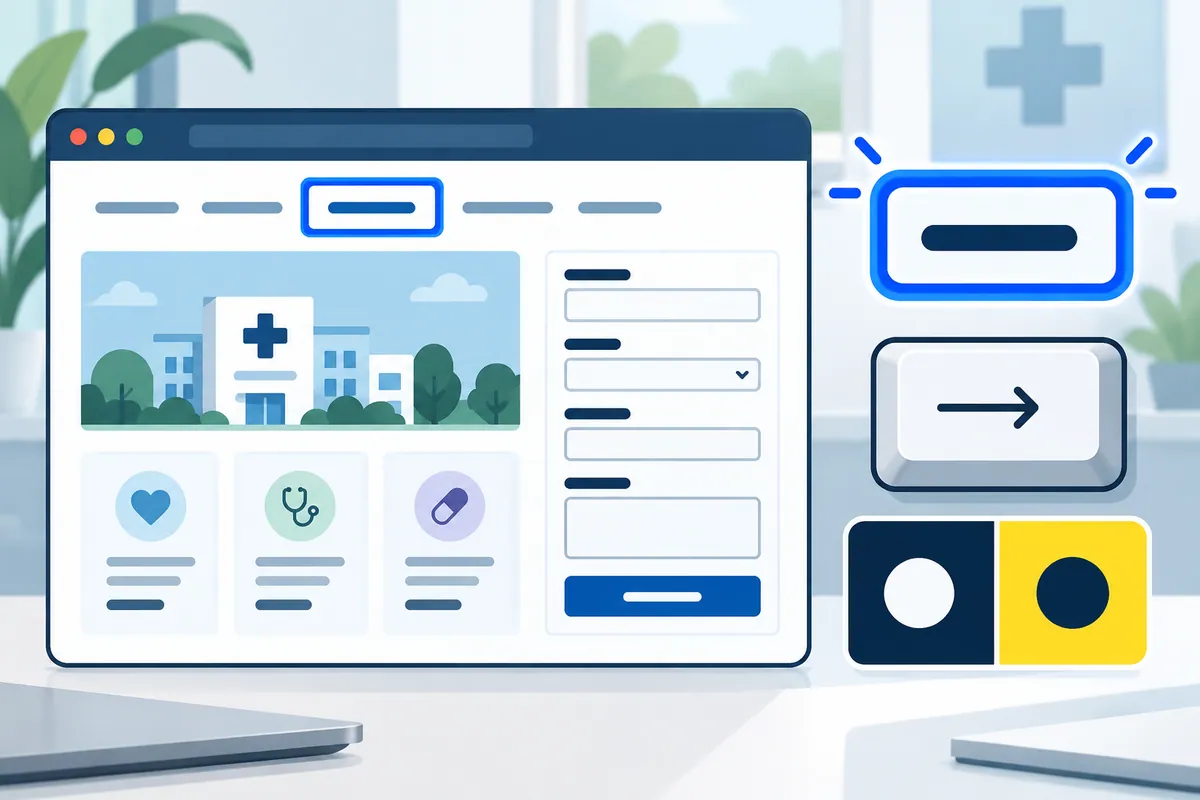
A decorative arrow after Contact us is silent, while a standalone Close popup icon remains announced as a usable action.
Why this matters to your practice
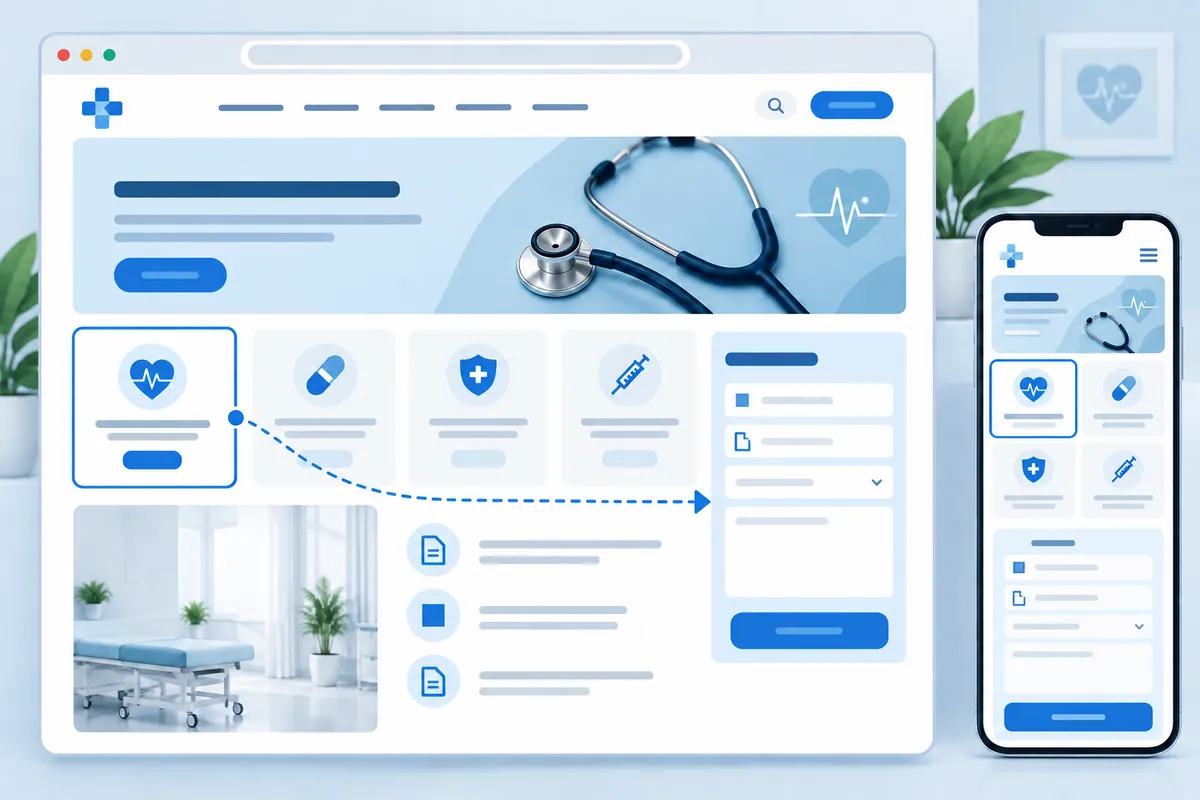
Decorative arrows and ticks can make a design feel friendly, but they should not turn spoken reading into a stream of unexplained symbols. Ask your supplier to listen through a real service listing rather than reviewing icons in isolation. Separate decoration from information: an arrow beside a clearly worded link may add nothing, while a standalone close button needs a meaningful name. The goal is to remove distracting repetition while keeping every useful action and warning understandable.
How to check the result
Accept when decorative imagery does not clutter reading and every meaningful standalone icon still communicates its purpose or state.
A mistake to avoid
Suppressing all image descriptions indiscriminately can silence important controls along with the decoration that prompted the change.
Turn reading into a next step
Your action checklist
Work through these checks with your team or supplier. Tick the ones you have resolved and leave unknowns open.
Record what you know, what is still missing and the answer you need from your team or supplier.
Use project decisions only, without personal, patient or confidential details. Entries stay in this page and are not submitted to Kay & Co. Copy or download before leaving; this page does not save your notes.
Further reading
These sources provide background for the topic. The practice examples and checklist are illustrative planning suggestions from Kay & Co.
Related guides
Need help with this?
Tell us what is getting in the way. Kay & Co. can help you understand the options and turn the next step into something that works for your practice.
Explore websites & patient experience services or discuss your project.
Try the free Healthcare Digital Planner to find your starting priority.