

What this means for your practice
List everyday materials and sequence the rollout around their use and replacement needs. Coordinate visual changes with factual checks rather than treating rebranding as a logo swap.
An example to discuss with your team
Trace one fictional enquiry from website to visit pack and signage.

A practical example
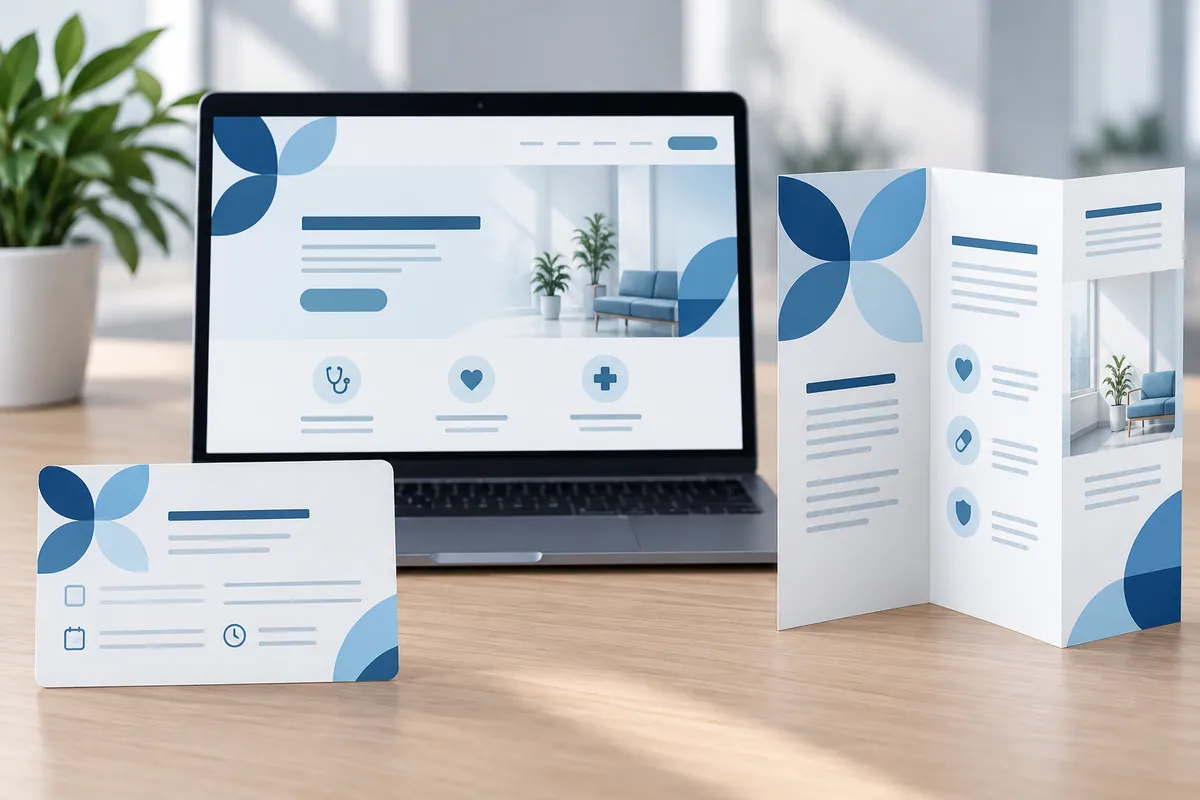
For example, follow a fictional enquiry from the website to the visit confirmation and the entrance sign. Ask where the family would see a different name or conflicting instruction. The home team can identify everyday printed items that a central designer may never encounter. Agree who replaces each item and how old stock is handled. A good rollout gives staff usable materials and families a coherent experience, rather than leaving the polished launch page disconnected from the visit itself.
Decide what happens to old stock before launch. Some materials can remain temporarily with an explanation; others contain changed facts and need replacing sooner. The responsible team should make that distinction rather than treating every item as equally urgent because the logo has changed.
Make the design useful in everyday work
Inventory the ordinary materials used between first enquiry and arrival at the home. Prioritise those that are active and important to recognition, including messages, visit packs and signs, rather than replacing items in an arbitrary visual order. Check facts while updating presentation so the new identity does not reproduce old contact details. Ask the team to walk a fictional enquiry through the rollout and identify moments where old and new materials need a clear explanation. Give each replacement an owner and expected timing. A coordinated rollout is easier to maintain than treating every item as a separate request to add a new logo.
How to check the result
Count inconsistent materials remaining after the planned rollout.
Turn reading into a next step
Your action checklist
Work through these checks with your team or supplier. Tick the ones you have resolved and leave unknowns open.
Record what you know, what is still missing and the answer you need from your team or supplier.
Use project decisions only, without personal, patient or confidential details. Entries stay in this page and are not submitted to Kay & Co. Copy or download before leaving; this page does not save your notes.
Further reading
These sources provide background for the topic. The practice examples and checklist are illustrative planning suggestions from Kay & Co.
Related guides
Need help with this?
Tell us what is getting in the way. Kay & Co. can help you understand the options and turn the next step into something that works for your practice.
Explore brand & design services or discuss your project.
Try the free Healthcare Digital Planner to find your starting priority.