

What this means for your practice
Define what should remain consistent across the group and where local information or imagery should vary. Consistency should help recognition without erasing useful differences.
An example to discuss with your team
Create two fictional home pages using the same system and compare their useful differences.

A practical example
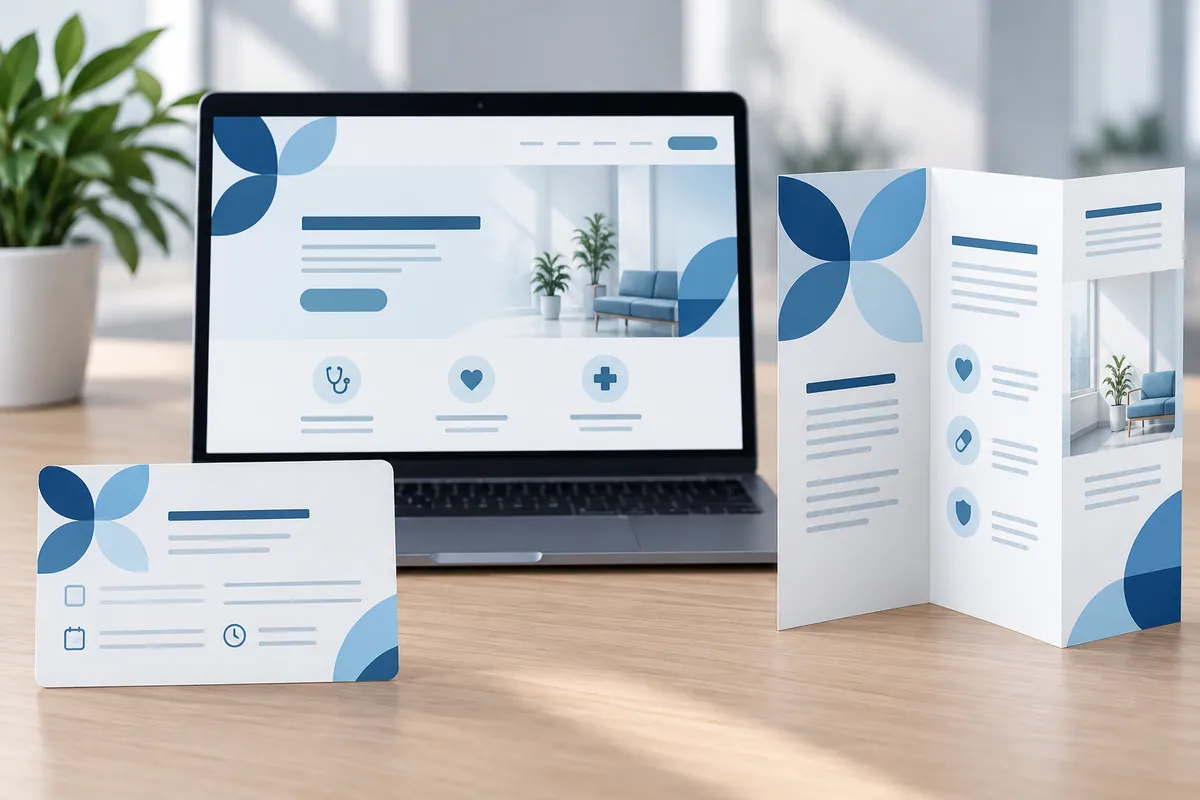
For example, two homes can share a page structure while showing their own entrances, spaces and visit arrangements. Ask the designer to build both examples with realistic local content. The home managers should confirm that the pages remain recognisable and accurate. Give local teams a clear way to request updates rather than forcing them to create unofficial alternatives. A good system makes the group easier to understand while preserving the differences families need when deciding which home to contact or visit.
Give local teams examples of permitted variation. Showing how a real location page can differ is easier to follow than a rule saying “retain local character”. This supports useful individuality while keeping the group name, navigation and essential information consistently presented.
Make the design useful in everyday work
Define the shared elements that help families recognise the group, then identify local information that should remain different. Services, arrival arrangements and genuine setting photographs should not be flattened into generic copy merely to make pages look consistent. Ask the designer to build two contrasting example home pages from the same system. Check whether each can explain its verified offer without forcing a new template or an invented similarity. Give local fact owners a clear update route within central publishing. The system should make useful differences easier to present, while keeping names and navigation coherent across the organisation.
How to check the result
Track local workarounds caused by overly rigid templates.
Turn reading into a next step
Your action checklist
Work through these checks with your team or supplier. Tick the ones you have resolved and leave unknowns open.
Record what you know, what is still missing and the answer you need from your team or supplier.
Use project decisions only, without personal, patient or confidential details. Entries stay in this page and are not submitted to Kay & Co. Copy or download before leaving; this page does not save your notes.
Further reading
These sources provide background for the topic. The practice examples and checklist are illustrative planning suggestions from Kay & Co.
Related guides
Need help with this?
Tell us what is getting in the way. Kay & Co. can help you understand the options and turn the next step into something that works for your practice.
Explore brand & design services or discuss your project.
Try the free Healthcare Digital Planner to find your starting priority.