

What this means for your practice
Define the audience, service scope and practical naming constraints first. Keep creative evaluation separate from professional checks on legal availability and protected terminology.
An example to discuss with your team
Ask unfamiliar readers what they think a proposed name offers.

A practical example
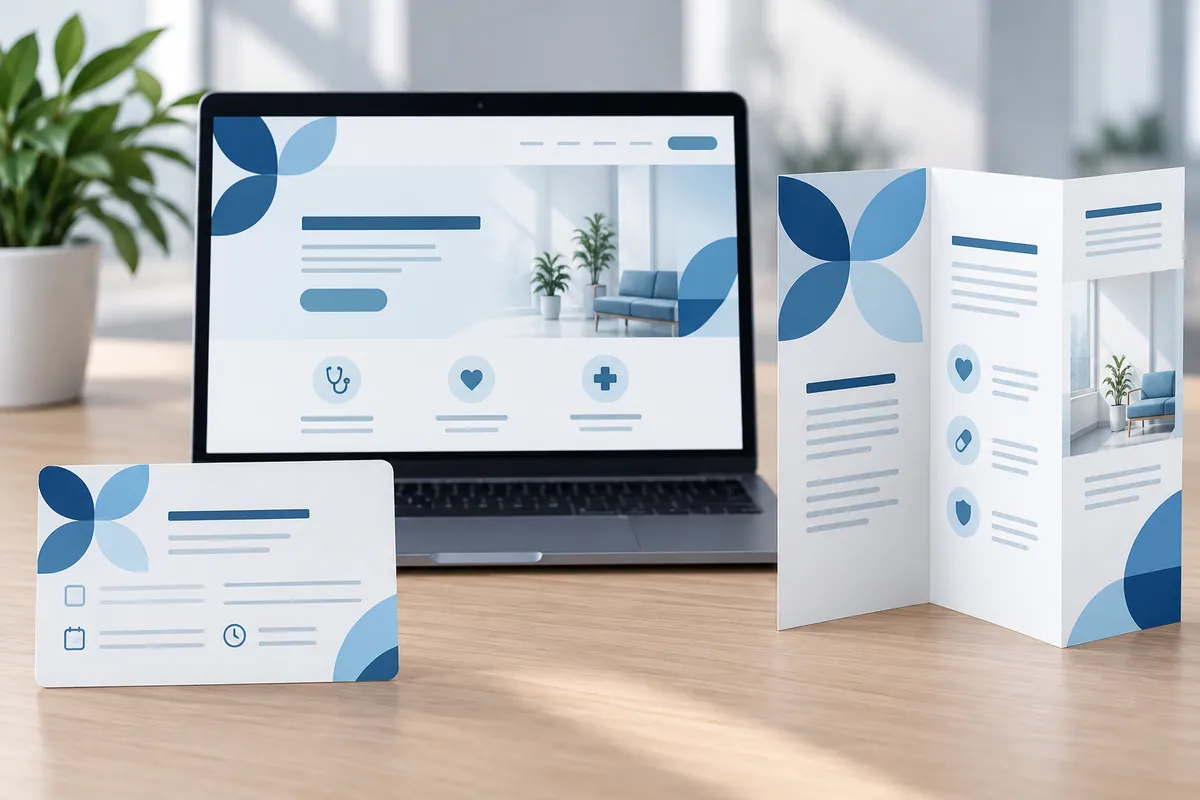
For example, a practice introducing a new assessment service can ask for names that feel connected to the existing clinic without implying a guaranteed result. Give the designer the service description and the situations in which the name will appear. Ask them to show a shortlist in those settings, with a reason for each option. Separately, arrange appropriate checks on availability and any naming restrictions before committing to production. Preference is part of the decision, but people also need to recognise what the name represents and who provides the service.
Write down the reasons a shortlisted name works as well as the reasons it may confuse. This makes the final discussion more useful than a vote based on personal preference alone, and gives future decision-makers a clear record of what the chosen name was intended to communicate.
Make the design useful in everyday work
Describe the service and intended audience before asking for name ideas. Give the naming team practical constraints, such as how the name will be spoken by reception, used alongside an existing practice name or applied to future services. Separate creative preference from factual and professional checks. Ask appropriate advisers to assess legal availability or protected terminology through the organisation's process rather than treating a positive audience reaction as clearance. Keep the brief specific enough to reject an attractive name that implies the wrong offer. That makes the discussion more useful than choosing between options solely on personal taste.
How to check the result
Record misleading interpretations before shortlisting names.
Turn reading into a next step
Your action checklist
Work through these checks with your team or supplier. Tick the ones you have resolved and leave unknowns open.
Record what you know, what is still missing and the answer you need from your team or supplier.
Use project decisions only, without personal, patient or confidential details. Entries stay in this page and are not submitted to Kay & Co. Copy or download before leaving; this page does not save your notes.
Further reading
These sources provide background for the topic. The practice examples and checklist are illustrative planning suggestions from Kay & Co.
Related guides
Need help with this?
Tell us what is getting in the way. Kay & Co. can help you understand the options and turn the next step into something that works for your practice.
Explore brand & design services or discuss your project.
Try the free Healthcare Digital Planner to find your starting priority.