

What this means for your practice
Choose image sizes and formats appropriate to their actual display purpose. Preserve informative detail and accessible alternatives while avoiding unnecessarily large transfers.
An example to discuss with your team
Compare a page before and after image changes at the same screen size.

A practical example
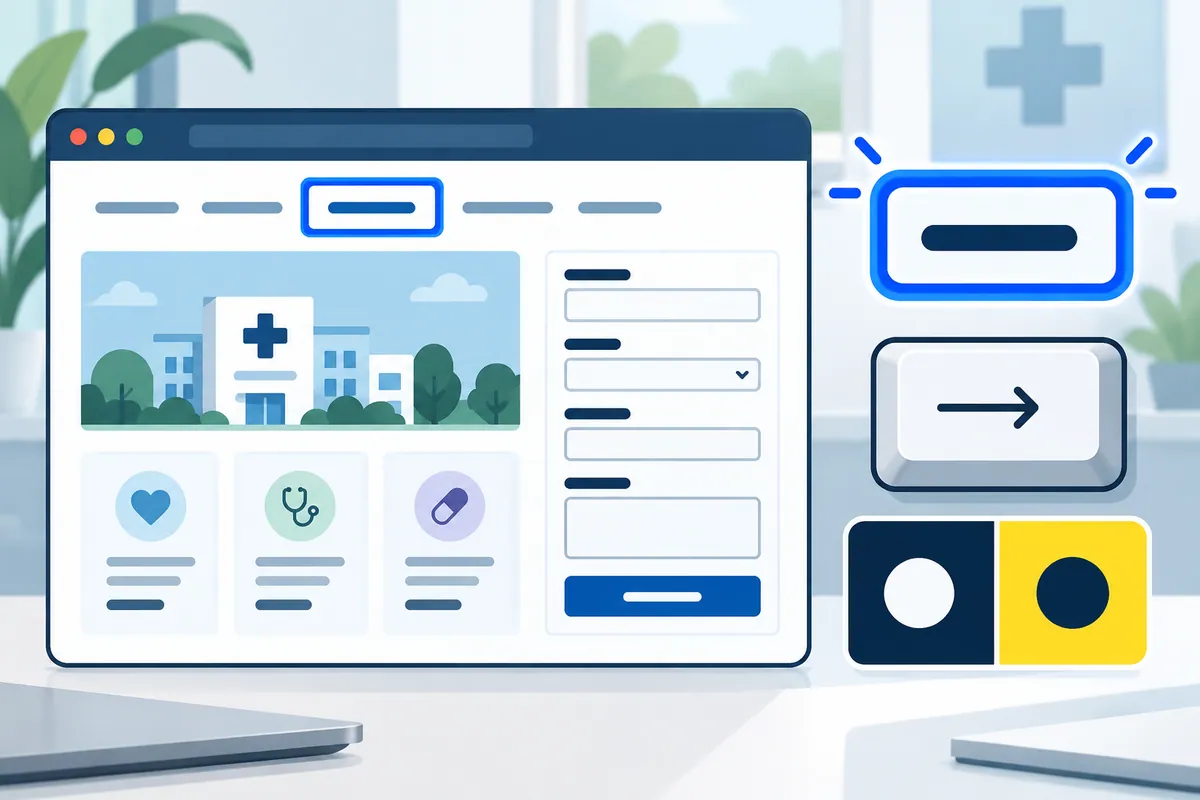
For example, an entrance image needs to show the relevant door and sign, whereas a decorative banner may not need the full camera file. Ask the supplier to compare the page before and after image preparation under the same conditions. Also check the written description where an image carries information. The useful outcome is a page that feels easier to load while still showing the detail visitors came to understand.
Give staff simple instructions for future image uploads, including which prepared version to use. Otherwise a one-off improvement may be undone by the next full-size camera file. Ask the supplier whether the editing tool can help produce suitable versions automatically while keeping the original available.
Make this improvement work
Ask the supplier to list the role and displayed size of the important images on a representative page. A small card photograph and a detailed explanatory image do not need the same treatment. Compare proposed changes at the intended screen size, checking whether useful detail and readable labels remain available. Keep an appropriate alternative explanation where the image carries information. Avoid judging quality from a full-resolution file viewed in isolation; the visitor experiences the complete page and its loading behaviour. Review before-and-after examples under the same conditions so a smaller transfer is balanced against the meaning the picture needs to preserve.
How to check the result
Ask the supplier to show the change in image file size and how the page loads in the same conditions.
Turn reading into a next step
Your action checklist
Work through these checks with your team or supplier. Tick the ones you have resolved and leave unknowns open.
Record what you know, what is still missing and the answer you need from your team or supplier.
Use project decisions only, without personal, patient or confidential details. Entries stay in this page and are not submitted to Kay & Co. Copy or download before leaving; this page does not save your notes.
Further reading
These sources provide background for the topic. The practice examples and checklist are illustrative planning suggestions from Kay & Co.
Related guides
Need help with this?
Tell us what is getting in the way. Kay & Co. can help you understand the options and turn the next step into something that works for your practice.
Explore websites & patient experience services or discuss your project.
Try the free Healthcare Digital Planner to find your starting priority.