
What to change
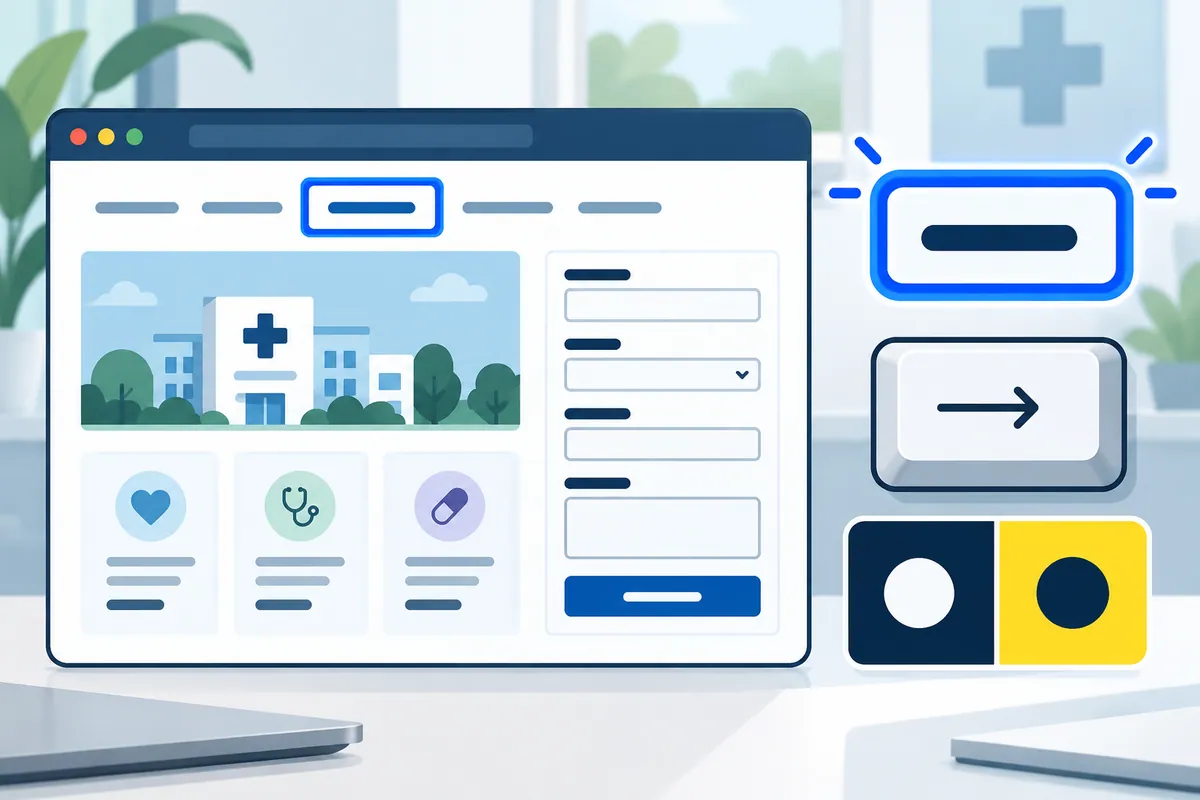
Ask the supplier to identify any custom keyboard shortcuts and demonstrate that ordinary typing or speech input does not accidentally activate them.
A worked example
Illustrative example
Pressing a letter while writing an enquiry inserts that letter. It does not open a search panel or move to another section of the page.
Why this matters to your practice
Keyboard shortcuts are an optional convenience, not something a visitor should discover when an ordinary letter unexpectedly opens a panel. Ask your supplier to list any shortcuts and show how they behave during typing. This includes search, account fields and longer messages. If your site does not need custom shortcuts, avoid adding them simply because a component supports them. Where they are useful, visitors should retain clear visible controls and a practical way to avoid unwanted conflicts.
How to check the result
Accept when custom shortcuts do not interfere with text entry and users have a practical route to avoid conflicts in supported interactions.
A mistake to avoid
Documenting a shortcut in help does not make accidental activation harmless or ensure visitors can discover how to turn it off.
Turn reading into a next step
Your action checklist
Work through these checks with your team or supplier. Tick the ones you have resolved and leave unknowns open.
Record what you know, what is still missing and the answer you need from your team or supplier.
Use project decisions only, without personal, patient or confidential details. Entries stay in this page and are not submitted to Kay & Co. Copy or download before leaving; this page does not save your notes.
Further reading
These sources provide background for the topic. The practice examples and checklist are illustrative planning suggestions from Kay & Co.
Related guides
Need help with this?
Tell us what is getting in the way. Kay & Co. can help you understand the options and turn the next step into something that works for your practice.
Explore websites & patient experience services or discuss your project.
Try the free Healthcare Digital Planner to find your starting priority.