

What to change
Ask your supplier to honour the device's reduced-motion preference for decorative effects while keeping page changes and actions understandable.
A worked example
Illustrative example
A section opens immediately or with a restrained transition under the visitor's reduced-motion setting, while its expanded state and newly available content remain clear.

Why this matters to your practice
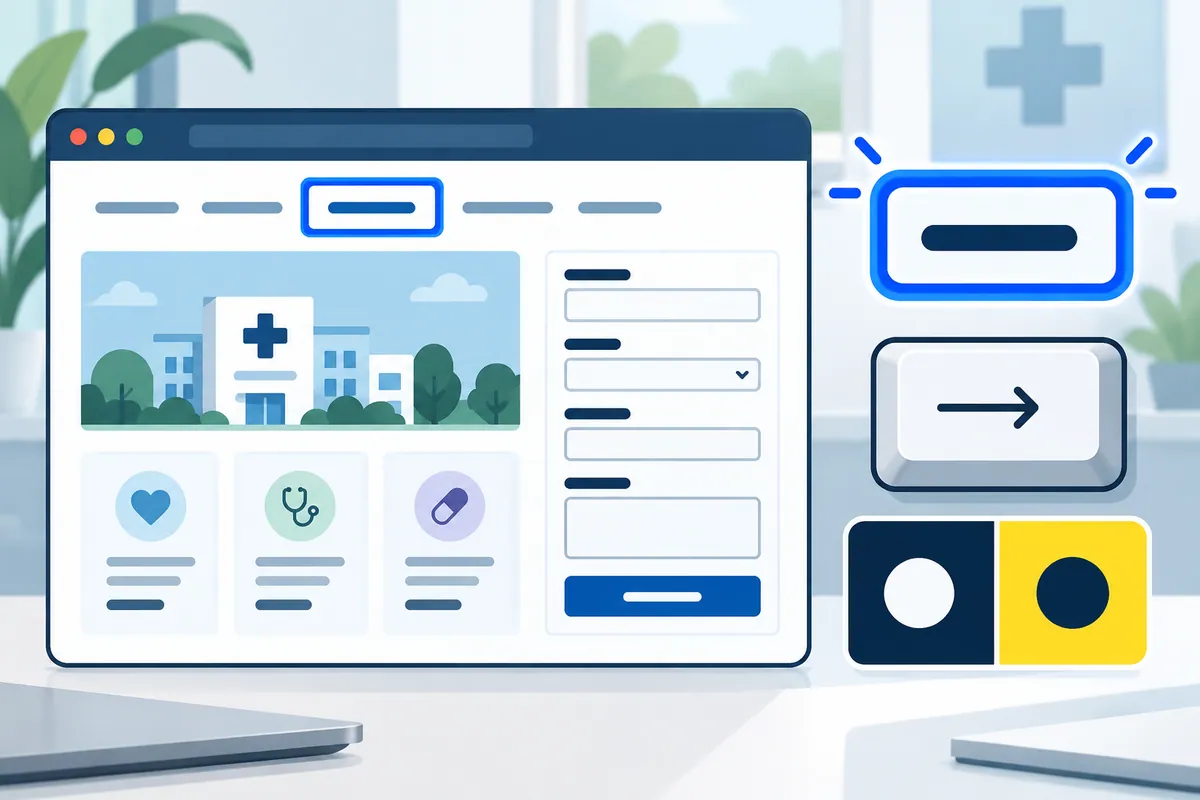
Some visitors ask their device to reduce movement. The website should respect that preference in decorative transitions and animations. Ask your supplier to demonstrate the main pages with the setting enabled, including menus and large visual effects. Your team can compare whether all information and actions remain available without the movement. The aim is a calmer experience that still explains changes clearly, rather than removing feedback or making a task depend on an animation finishing.
A practical review example
A site may use large sliding transitions between sections. Ask your supplier to enable the device's reduced-motion preference and move through the same pages, menus and form stages. All information should remain available and the current state should still be clear. Your team should compare the experience rather than just check that an animation setting exists. Removing movement should not also remove feedback that a panel opened or a request completed, nor leave the task waiting for an invisible animation to finish.
How to check the result
Accept when the supported preference meaningfully reduces unnecessary movement without hiding information or breaking interaction feedback.
A mistake to avoid
Removing all visual feedback can make state changes confusing; replace motion with clear stable states rather than leaving the action unexplained.
Turn reading into a next step
Your action checklist
Work through these checks with your team or supplier. Tick the ones you have resolved and leave unknowns open.
Record what you know, what is still missing and the answer you need from your team or supplier.
Use project decisions only, without personal, patient or confidential details. Entries stay in this page and are not submitted to Kay & Co. Copy or download before leaving; this page does not save your notes.
Further reading
These sources provide background for the topic. The practice examples and checklist are illustrative planning suggestions from Kay & Co.
Related guides
Need help with this?
Tell us what is getting in the way. Kay & Co. can help you understand the options and turn the next step into something that works for your practice.
Explore websites & patient experience services or discuss your project.
Try the free Healthcare Digital Planner to find your starting priority.